-
-
-
- Infection control
- Role of Centers for Disease Control and Prevention
- Standard Precautions
- Involve the use of barrier protection, such as gloves, goggles, gown, or mask, to prevent contamination from
- Blood
- All body fluids
- Secretions and excretions except sweat, regardless of whether they contain visible blood
- Nonintact skin
- Mucous membrane
- Involve the use of barrier protection, such as gloves, goggles, gown, or mask, to prevent contamination from
- Transmission-based precautions
- Airborne, droplet, and contact precautions
- Airborne Precautions
- In addition to Standard Precautions, use Airborne Precautions for patients known or suspected to have serious illnesses transmitted by airborne droplet nuclei.
- Examples of such illnesses include measles, varicella (including disseminated zoster), and tuberculosis.
- Droplet Precautions
- In addition to Standard Precautions, use Droplet Precautions for patients known or suspected to have serious illnesses transmitted by large-particle droplets.
- Examples of such illnesses include the following:
- Invasive Haemophilus influenzae type b disease, including meningitis, pneumonia, epiglottitis, and sepsis
- Invasive Neisseria meningitidis disease, including meningitis, pneumonia, and sepsis
- Other serious bacterial respiratory tract infections spread by droplet transmission, including diphtheria (pharyngeal), mycoplasmal pneumonia, pertussis, pneumonic plague, streptococcal pharyngitis, pneumonia, and scarlet fever in infants and young children
- Serious viral infections spread by droplet transmission, including adenovirus, influenza, mumps, parvovirus B19, and rubella
- Contact Precautions
- In addition to Standard Precautions, use Contact Precautions for patients known or suspected to have serious illnesses easily transmitted by direct patient contact or by contact with items in the patient’s environment.
- Examples of such illnesses include the following:
- Gastrointestinal, respiratory, skin, or wound infections or colonization with multidrug-resistant bacteria judged by the infection control program based on current state, regional, or national recommendations, to be of special clinical and epidemiologic significance
- Enteric infections with a low infectious dose or prolonged environmental survival, including Clostridium difficile; for diapered or incontinent patients: enterohemorrhagic Escherichia coli O157:H7, Shigella organisms, hepatitis A, or rotavirus
- Respiratory syncytial virus (RSV), parainfluenza virus, or enteroviral infections in infants and young children
- Skin infections that are highly contagious or that may occur on dry skin, including diphtheria (cutaneous), herpes simplex virus (neonatal or mucocutaneous), impetigo, major (noncontained) abscesses, cellulitis or decubitus, pediculosis, scabies, staphylococcal furunculosis in infants and young children, zoster (disseminated or in the immunocompromised host)
- Viral or hemorrhagic conjunctivitis
- Viral hemorrhagic infections (Ebola, Lassa, or Marburg)
- Airborne Precautions
- Infection control
- Restraining methods
- Alternative methods: Consider first
- Diversional activities
- Parental participation
- Therapeutic holding
- Use least restrictive
- Behavioral restraints
- Used when significant risk present
- Determine cause of behavior first
- Mummy restraint or swaddle
- Alternative methods: Consider first
-
-
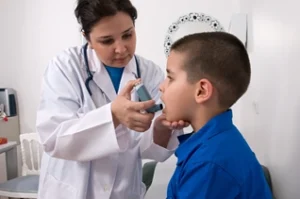
Managing Asthma in Schools
For Everyone AT A GLANCE Asthma is a leading chronic illness among children and adolescents in the United States. It is one of the leading